
Mission-Ready Aircraft: How Interior Design Impacts Critical Operations
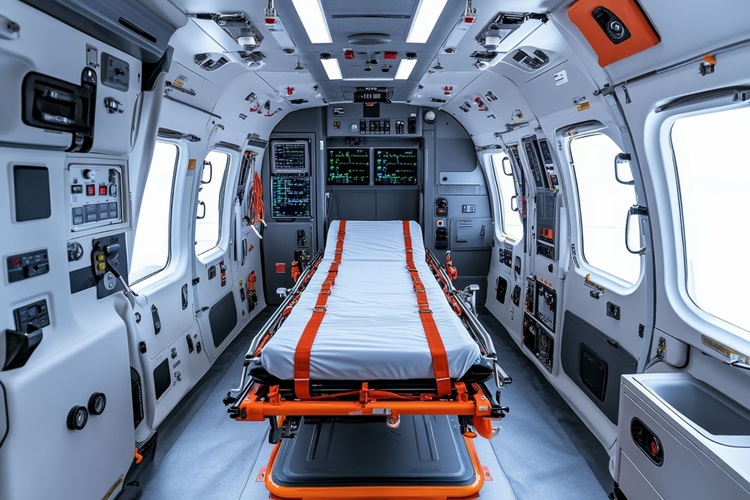
Flying sick patients isn’t like flying cargo. Patient survival depends on the medical aircraft’s cabin configuration. These aircraft require specialized interiors for rapid medical intervention and flight safety. Bad design kills time. Good design saves lives.
Table of Contents
Form Follows Function in the Sky
Step inside a medical aircraft and forget everything you know about plane interiors. No seat rows. No overhead compartments. Just open space filled with medical gear bolted to walls, floors, and ceilings. Medical teams move differently than passengers. A nurse checking IV drips can’t squeeze past airline seats. Paramedics doing chest compressions need elbow room. Doctors must reach patients from any angle without tripping over equipment. So designers watch medical crews work. They track every movement, every reach, every stumble. Then they build cabins around those movements.
Weight Distribution and Space Management
Medical gear is heavy. A single ventilator weighs as much as two adult passengers. Don’t forget to add monitors, pumps, oxygen tanks, and medical supplies. You now have thousands of extra pounds to allocate. Just piling equipment wherever it fits would wreck the aircraft’s balance. Too much weight in the back makes the nose point up. Too much on one side causes constant banking. Either situation burns extra fuel and stresses pilots.
Engineers map out every pound. Heavy stuff stays low, near the aircraft’s center. Light supplies go up high. But medical logic doesn’t always match aviation logic. Crews want certain tools at eye level, not floor level. Some equipment works better mounted high, despite its weight. That’s when engineers get creative. They design brackets that spread weight across multiple attachment points. They hollow out components. They switch steel for titanium, aluminum for carbon fiber. Every ounce cut from one spot allows critical gear somewhere else.
Technology Integration and Power Systems
Hospital equipment expects hospital power: steady, clean, reliable. Aircraft power is none of those things. Engines create electrical spikes. Generators produce weird frequencies. Radio transmissions cause static on monitors. The fix requires layers of protection. Converters smooth out voltage swings. Filters catch electrical noise before it scrambles an EKG. Separate wiring keeps navigation radios from interfering with ventilators. Everything gets backup power. Then those backups get backups.
Power outlets pop up in strange places because medical gear goes in strange places. That corner behind the pilot’s seat? Perfect for a suction unit, if there’s power. The ceiling mount for IV pumps needs electricity too. Planning these locations takes months of mock-ups and testing.
Human-Centered Design Elements
Air ambulance interiors have evolved through trial and error, with companies like LifePort leading innovations in equipment mounting that keeps gear secure while crews load patients in seconds. The smartest designs feel invisible; medical teams just work without thinking about the aircraft.
LED strips throw bright light exactly where needed. No shadows hiding veins. No glare blinding staff. Storage bins use colors that make sense even to exhausted crews: red for trauma, blue for airway, green for medications. Soundproofing lets doctors hear lung sounds over engine roar. Temperature zones keep shivering patients warm while sweating nurses stay cool. Surfaces wipe clean between missions because infection control never stops. Handles sit at natural heights. Latches open with one hand. Everything fights against confusion and delay when seconds count.
Conclusion
Getting medical aircraft interiors right takes more than bolting stretchers to the floor. Engineers and doctors perfect these designs through years of testing and refinement. Every element in an aircraft is precisely placed for a reason. Patient survival hinges on these interiors. Tomorrow’s medical aircraft will pack in new technology and face new challenges. But success will still come down to smart design that puts patient care first while keeping everyone safely airborne.

Leave a reply
You must be logged in to post a comment.